Ya’ara here. I’m the new coordinator for the “Hitnagdut” - the new Training Program for activists of Resistance Solidarity Network (RSN), writing to you from Haifa. I have been a climate justice organizer for almost 20 years, but it took me years to truly understand what climate injustice actually means in Palestine-Israel. This understanding became clear once I went to the Occupied Palestinian Territories in the West Bank. This is where meeting Palestinian farmers, listening to their experiences and standing with them in protests for land and water justice made me realize how interconnected these issues are. It became clear to me that the root cause of climate collapse is also responsible for the reality in the West Bank - violent systems of oppression and supremacy. I’d like to share with you a bit of my journey and why I joined RSN.
As a Jewish Israeli growing up in a Zionist environment, I was brought up to believe that serving in the military was my way to give back to my community. I was taught to fear Palestinians and Arabs, and that we have no choice but to use violence against them. Many indoctrination efforts were made to make me believe in this narrative: from the Israeli education system to the youth movement I was part of. So when the time came to enlist in the military, I had no idea there was any other option.
I wasn’t really aware of what I had been a part of in my military service until I gave a testimony to “Breaking the Silence”, an anti-occupation organization working to expose the reality of the occupation through testimonies of ex-soldiers. As an ex-military officer in the West Bank, I felt an enormous shame realizing that there was so much that I didn’t know, and that it was not a coincidence.
As a result, while campaigning against fossil fuel corporations, I took the time to learn as much as I could about the Occupation and the Nakba. Through a process of unlearning all the paradigms I was born into, I was able to see the blind spots and privileges I took for granted all of my life, and decided to take action to resist them. Through solidarity tours, protests, and social justice campaigns, I intensified my understanding that climate justice and ending social and political injustices are inseparable and intertwined. I developed a more holistic and broad way of organizing and a better understanding of solidarity. Part of that was continually resisting reserve military duty, while organizing, researching, writing and campaigning at the intersection of climate justice and occupation.
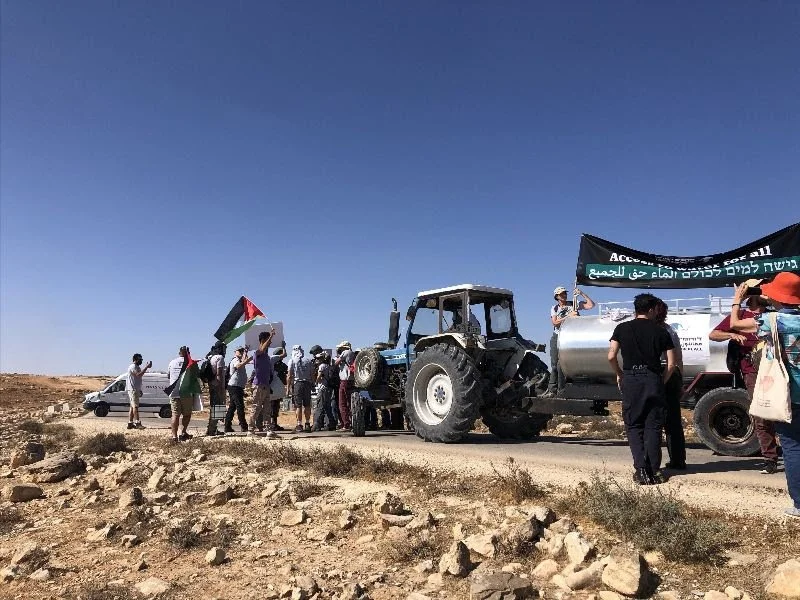
I joined Resistance Solidarity Network to be the coordinator of the training program “Hitnagdut” (Hebrew for Resistance), because I believe that through teaching and offering training on nonviolence, civil resistance, and civil disobedience, we can broaden the movement that is fighting to end the occupation. In the program, we aim to support the resistance to occupation and apartheid by building an infrastructure of knowledge of nonviolent civil resistance. We will engage with grassroots groups, organizations and communities who wish to scale up their efforts, and offer them organized and professional training. We also hope to establish trainings for burnout prevention and sustainable organizing for activists, to support the sustainability of the movement. All this important work will be done in full partnership with veteran organizers on the ground who have been leading nonviolent resistance campaigns for over two decades.
Learning about non-violent struggle and civil disobedience had a big part of my radicalization and politicization. I truly believe that the more people have access to these tools and theories of change, the more they will be compelled to join the resistance. With your help, we can get these trainings to as many groups and organizations as possible. Will you support this work? I am looking forward to keeping you updated.