Itamar here. I refused to serve in the Israeli military as a reservist, and since October 7th I have dedicated myself to non-violent resistance. I am the director of “Paneinu-Letov” (“Facing Good” in Hebrew), an organization focused on building an infrastructure of knowledge about non-violent civil resistance struggles. Our mission is to serve the movement that is fighting to attain a stable democracy in Israel, a necessary stage in the way towards ending the occupation. With the support of RSN we can expand our capacity to do this work. We want to thank you, the community of Resistance Solidarity Network, for the support you have given us so far - it really makes a difference. Would you be willing to continue your support?
In Paneinu Letov, we support civil resistance movements that fight for democracy. We teach community organizing, non-violent civil resistance strategies and practices, based on knowledge accumulated in research and experience of organizations around the world. We localize this knowledge to make it accessible and relevant to Israeli organizations and groups who wish to be more effective. We do this because we believe that if people knew how to use civil resistance tools, we could scale up the way we fight the government, and end the bloody conflict.
We started Paneinu-Letov in the midst of the big demonstrations against the ultra-right led Judicial reform in 2023 – where the most right-wing and extremist Israeli government in history was trying to weaken the court system. The protests were getting bigger and more popular, yet at a certain point something felt stagnant and ineffective. After October 7th and the beginning of the war on Gaza, it got worse. My two colleagues in Paneinu-Letov, who participated in those protests, believed that the groups involved needed to be more united and collaborative. It was clear that a strategic plan was necessary.
Frustrated, we knew we had to upgrade our resistance toolbox. We wanted to learn from similar struggles that were successful. So we met with Srđa Popović, one of the leaders of the ‘Otpor’ movement in Serbia, who brought down the tyrant Slobodan Milošević. We learned from him about non-violent struggle and started working on a strategic plan for the Israeli movement for democracy.
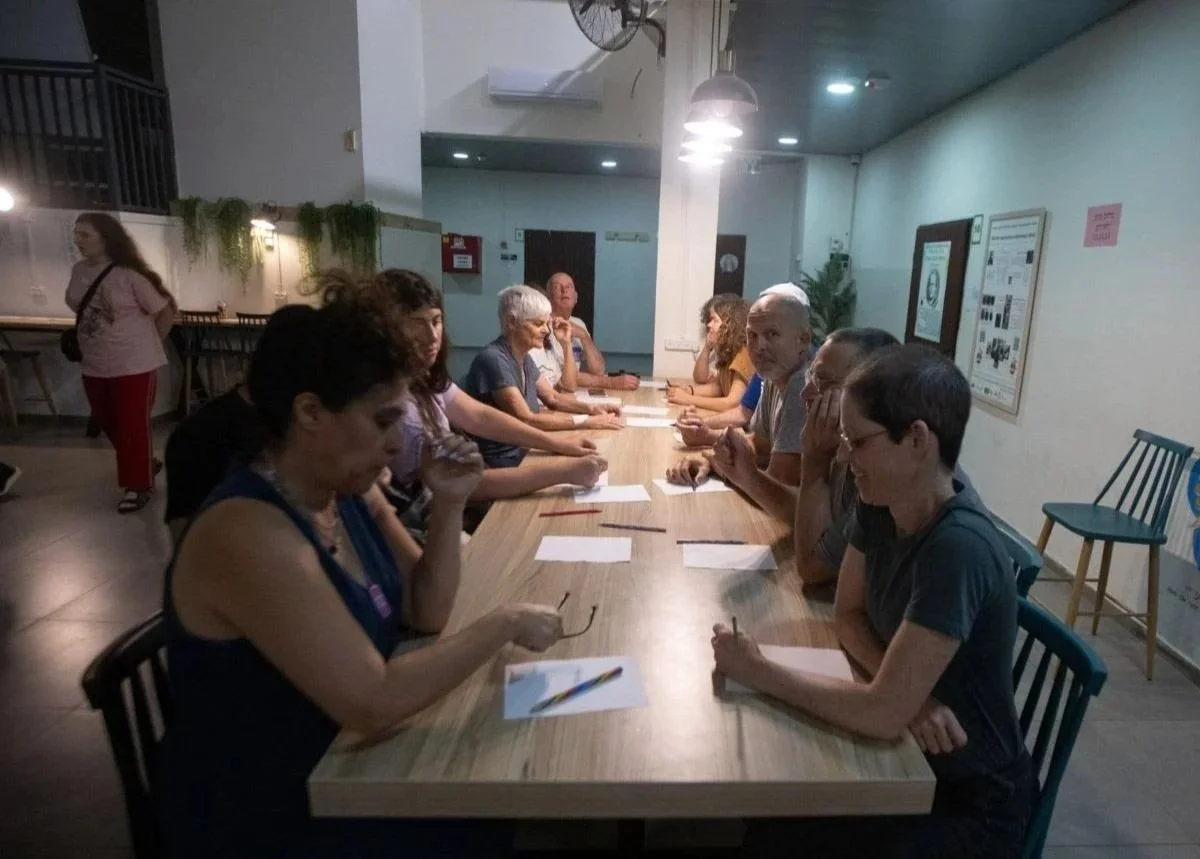
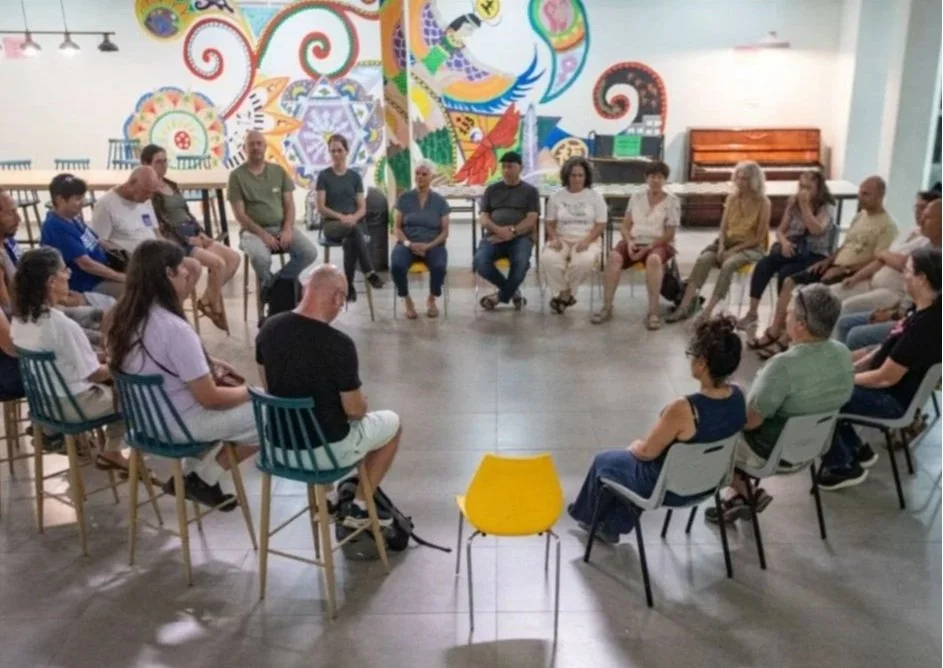
But when we tried to offer it to groups within the movement, it was rejected. This taught us an important lesson: You cannot offer a plan from the outside to people who are struggling, without involving them from the beginning, and expect them to accept it. It doesn't work that way. So we started over - built trainings, gathered knowledge and tools about non-violent resistance from around the world, and offered them to the people, so that they can have the ability to do it on their own. Since then, we've been teaching non-violent resistance, helping organizations to work more effectively and strategically.
One of our first achievements in putting these learnings into practice was supporting the group ‘101 Guard’, who organized ongoing Sit-Ins to put non-violent pressure on the government to stop the war on Gaza and bring back all the hostages. These protests were strategically planned, with multiple people in different cities sitting quietly in public spaces as an act of protest. Because it was an action that many people could join, it became very popular and eventually one of the most important movements against the war.
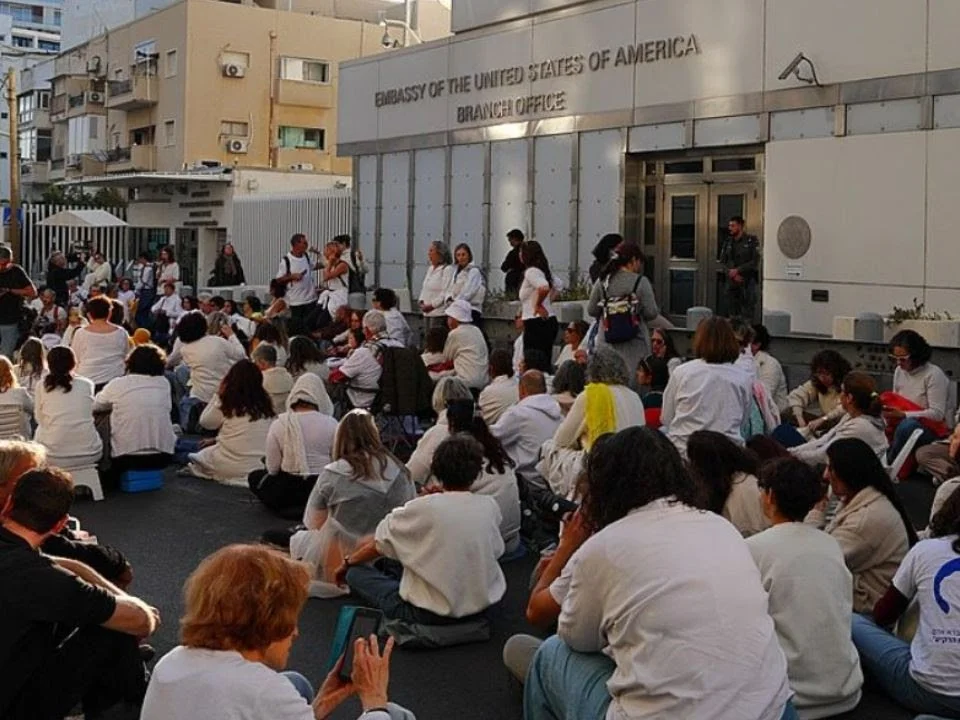
101 Guard protest outside USA Embassy. Credit: Lizzy Shaanan Pikiwiki Israel, CC BY 2.5, via Wikimedia Commons.
The support you give us is very meaningful, and reinforces our capacity to work on such exciting projects. It also gives us the motivation to keep going in an unstable and unpredictable reality. Please support RSN so that we and others can keep developing non-violent resistance infrastructure on the ground.