Roy Here. As a teenager, I refused to serve in the Israeli occupation army. Today, I am a media coordinator for the Resistance Solidarity Network.
This week, following Israel’s national election, Jewish-Palestinian demonstrations erupted all over the country in protest of the racist exclusion of the Palestinian-led political parties, which gained a record number of seats. Thousands of protesters gathered in the cities of Tel Aviv, Haifa, Jerusalem, Herzliya, Tayibe, and Tira, calling for a joint Jewish-Arab government. As the Resistance Solidarity Network, we amplified these protests and resistance actions on our social media platforms, telling their stories internationally. Please help us with this mission by sharing our content on Facebook, Instagram, X, and TikTok.
As an Israeli citizen, I used my voting rights in the last election - a privilege that nearly 6 million Palestinians living under occupation in Gaza, the West Bank, and East Jerusalem do not have. By contrast, 2 million Palestinians citizens of Israel do have the right to vote, and in this election they used it in unprecedented numbers.
The exceptionally high Palestinian voter turnout resulted in huge success for the Arab-led parties, making them crucial for forming the next government. For many in the Israeli anti-occupation resistance movement, that seems like a real opportunity for change. The anger and frustration that built within the Israeli public over the last blood-filled years made this election critical. We saw a growing movement of Israelis saying that Netanyahu and his ultra-nationalist government have to go, and they have to go now. As the results came in, it was evident that neither Netanyahu nor his opposition had a clear majority.
Unless, of course, you count the Arab parties.
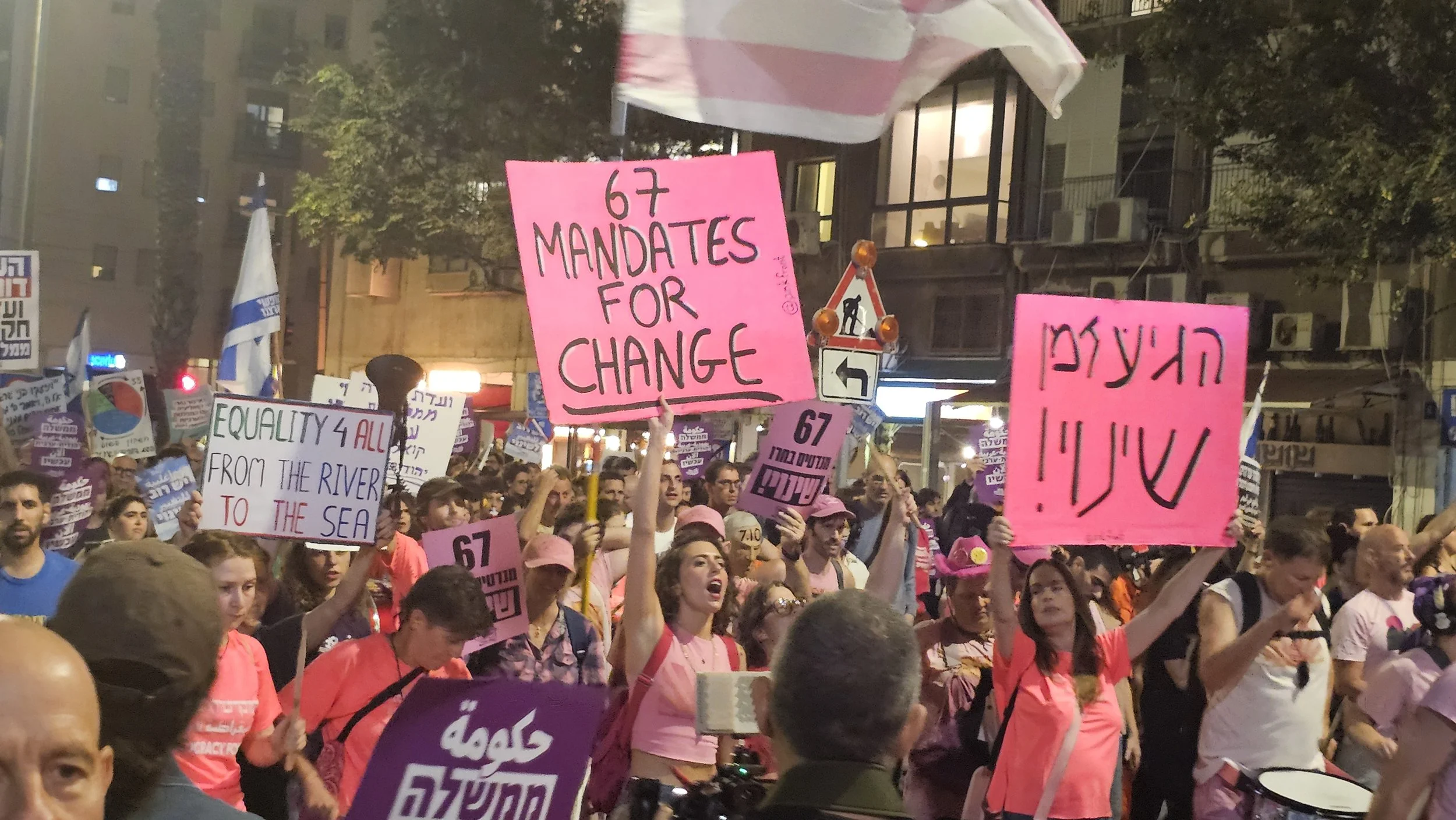
In the “Jewish and democratic” State of Israel, the Arab parties are historically left out of the official government. Even when they joined the coalition during the 1950s-1970s and briefly in 2021, their members have never been appointed to ministerial positions. This is due to many factors that only intensified after the 1967 occupation. On the one hand, the Arab parties do not join the coalition due to their ideological opposition to Israel’s Occupation, apartheid, and Zionist national identity. On the other hand, the Zionist parties refuse to cooperate with them due to “a lack of public legitimacy” - a euphemistic way of saying “racism.”
Many see the election results as a historical opportunity to move away from this norm, bringing Jewish and Palestinian citizens of Israel together to bring down Netanyahu’s genocidal regime.
Protests erupted all over the country, urging the elected leaders to join forces. As you might have seen on our social media pages, the people called out loud and clear: “You cannot build a democracy without the Arab vote” and “a democracy is not built by boycotting Arabs.”
In a couple of days, the new Knesset will be sworn in. The fight over forming the coalition is far from over, and the activists on the ground are preparing for a long struggle. Netanyahu’s liberal opposition, the self-proclaimed “Bloc of Change,” will now have to decide whether or not it is ready for true change.
I invite you to share this video on your social media platform of choice
(it’s on Facebook, Instagram, X, and TikTok) — and add your thoughts.
Tag us in your posts, and we promise we will see them.